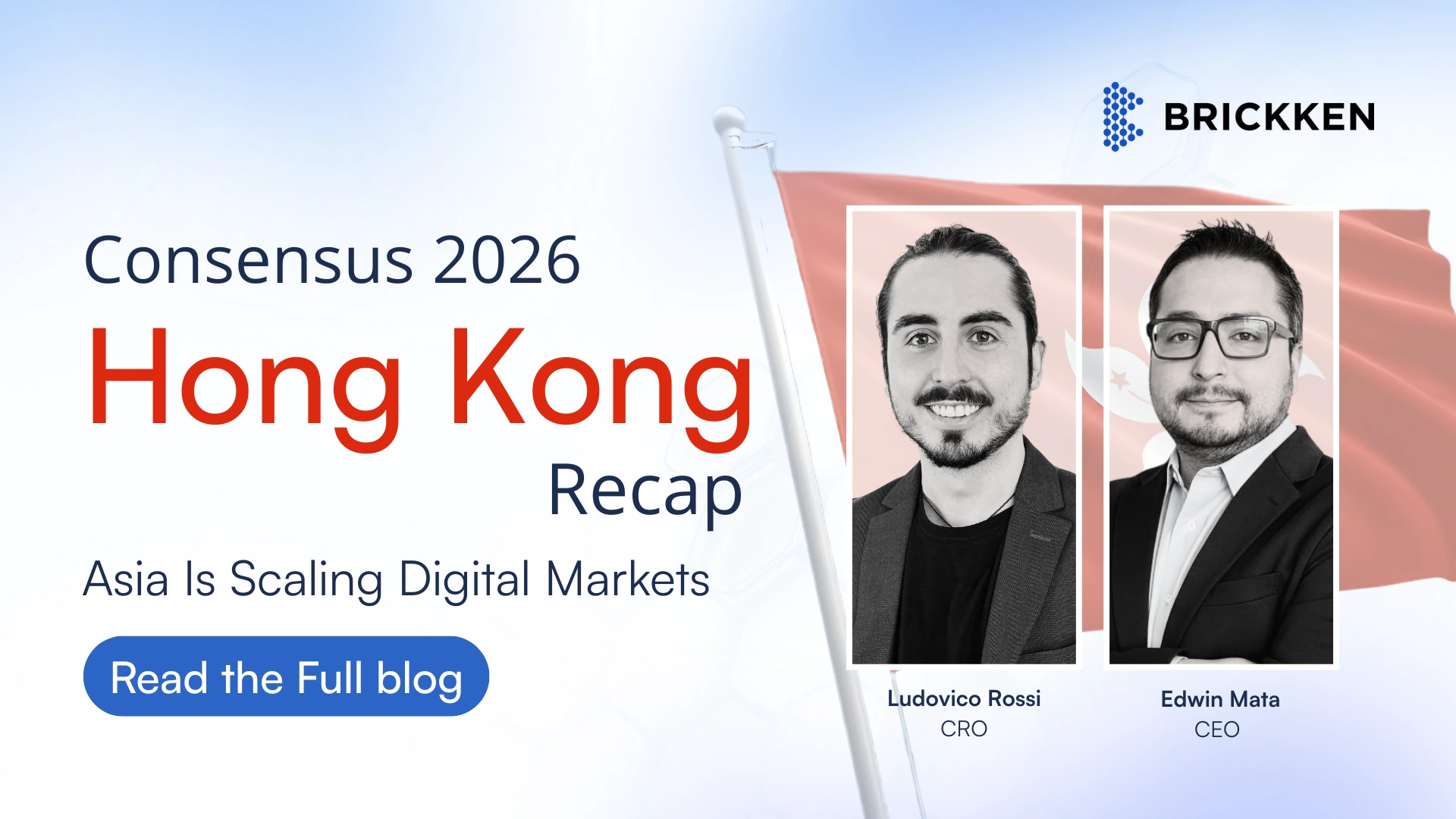
Consensus Hong Kong 2026 marked a turning point.
The conversation has clearly moved beyond experimentation. What we witnessed on the ground was not speculation about possibilities, but serious discussions around infrastructure, compliance, and capital formation.
Across panels, side events, and institutional meetings, one message was consistent: the next phase of digital asset markets will be defined by execution.
Brickken was on the ground throughout the week, with our co-founders meeting institutions, asset managers, regulators, and infrastructure providers shaping this transition.
Here are the key takeaways.
In previous cycles, the focus was on narrative. At Consensus 2026, the focus was on structure.
The market is no longer asking whether assets can move on-chain. It is asking:
This is no longer a branding problem. It is a market design problem.
When private markets operate on-chain, they must replicate and improve the controls of traditional finance. That requires infrastructure, not just digital wrappers.
Hong Kong is emerging as a key jurisdiction in regulated digital finance.
With developments around Project Ensemble and increased clarity on institutional participation, the region is positioning itself as a bridge between traditional capital markets and on-chain settlement rails.
The conversations we had reflected a clear appetite for:
Asian liquidity is not chasing hype. It is seeking compliant exposure.
Real estate remains a strong entry point into on-chain markets. However, institutional interest is broadening.
One of the most notable themes during Consensus was the rise of treasury vault structures.
These models typically allow stablecoin deposits, which are then allocated by professional managers into structured assets such as U.S. Treasuries. Yield is distributed to participants under defined compliance and operational frameworks.
Structurally, these vaults resemble regulated funds operating on-chain.
The important shift is this: institutions are not looking for DeFi yield. They are looking for managed exposure, regulatory clarity, and capital preservation.
This is where infrastructure becomes critical. Vault structures require:
The narrative may focus on vaults, but the underlying requirement is compliant fund infrastructure.
One recurring theme across interviews and discussions was liquidity.
Liquidity does not emerge automatically because assets are placed on-chain. It depends on:
Platforms must think beyond issuance. They must consider how assets will function across their entire lifecycle.
Brickken’s focus has always been on enabling this full lifecycle management, from structuring and onboarding to reporting and secondary operations.
Another clear takeaway from Consensus was the seriousness around compliance.
Standards such as ERC-7943, discussions around permissioned asset controls, and growing regulatory participation signal that the infrastructure layer is maturing.
The next wave of adoption will not be driven by loosely structured instruments. It will be driven by platforms that can operate within defined legal and institutional parameters.
This is particularly relevant for:
As these products move on-chain, regulatory design becomes foundational.
During the week, Brickken participated in multiple high-level conversations:
Across all discussions, the theme was consistent: digital asset markets are entering their infrastructure phase.
One of the most forward-looking insights from Consensus is the convergence between vault narratives and regulated fund structures.
What the market calls a vault is often a fund with:
The opportunity ahead is not simply digitizing assets. It is enabling compliant, scalable fund infrastructure that can operate across jurisdictions.
This includes:
The institutions exploring these models are not looking for experimentation. They are looking for operational reliability.
Consensus Hong Kong confirmed that the industry is maturing.
Speculation cycles may fluctuate, but the infrastructure layer continues to strengthen.
The next phase of capital markets will not be led by noise. It will be led by platforms capable of:
Brickken’s role in this evolution remains clear.
We are not building narratives. We are building infrastructure.
If you are exploring how to structure compliant on-chain funds, treasury vehicles, or real-world asset strategies, we welcome the conversation.
The execution phase has begun.

